
Wayne County City Directory Collections
Detroit is the best-documented historical shelf for a Wayne County city directory search. The Detroit Public Library directory guide lists Detroit volumes for 1837, 1845 to 1846, and 1850 to 1941, followed by selected East and West volumes from 1953 through 1974. Those are listed holdings, not an unbroken countywide sequence. Burton also holds Detroit telephone directories beginning in 1878. Other Michigan towns appear in parts of the collection from roughly the 1930s through the 1980s, so a suburb needs its own catalog check.
| Collection | Years | Where held | Access |
|---|---|---|---|
| Detroit city directories | 1837; 1845-46; 1850-1941; selected 1953-74 | Detroit Public Library Burton Historical Collection | Consult collection holdings and current reading-room rules |
| Detroit telephone directories | Beginning 1878 | Burton Historical Collection | Historical directory source, coverage varies by volume |
| Polk and Bresser/criss-cross formats | Publisher and place dependent | Library of Michigan catalog, print shelves, microfilm room | Search the ANSWER catalog by city name |
| NARA directory finding aids | Detroit 1928-32; Dearborn, Wayne County, and Fordson selected 1926-34 | National Archives finding aid | Use as a location and year lead |
Burton’s printed-year gaps matter. A name missing from one volume can reflect a gap, an alternate spelling, a move, or a different directory format. The Library of Michigan advises searching its catalog for the municipality plus “city directory”; its print volumes are on the second floor south by city and county, with microfilm and fiche in the Microfilm Room.
Detroit Public Library’s directory-resource listing is the source for the holdings shown here.
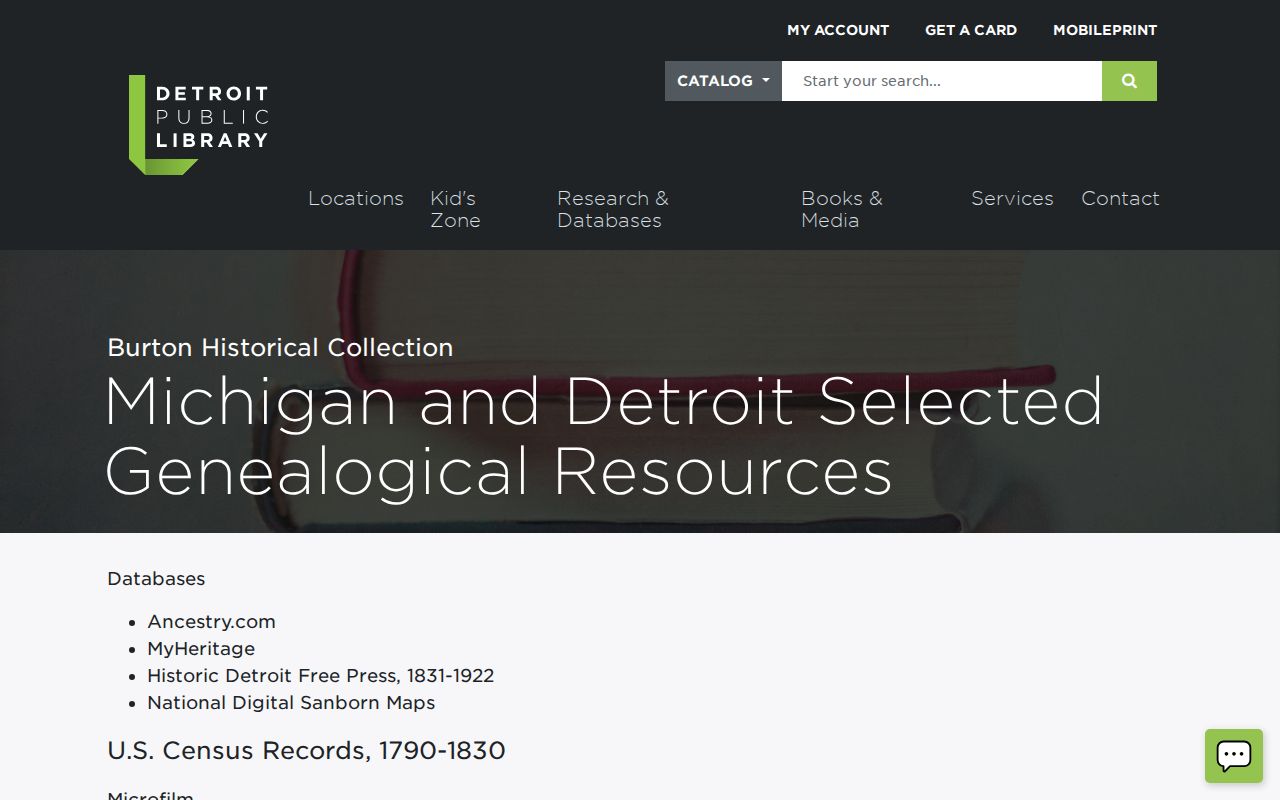
The listing is a useful year-and-format check before a trip or a catalog request, but it does not turn every listed year into a complete household record.
Wayne County City Directory Year Runs
Detroit’s sequence is strongest before the middle of the twentieth century. The early holdings include 1837, 1845 to 1846, and 1850 to 1941. Later records are selective: 1953 West, 1954 East, 1956 West, 1957 East, 1958 West, 1963 East, 1964 East and West, 1965 West, 1967 East, 1968 East and West, 1970 East and West, 1973 West, and 1974 East. East and West labels must be copied with the citation because they can affect the result set.
This record pattern reflects Wayne County’s layered geography. Detroit is not a substitute for Dearborn, Livonia, Westland, Downriver cities, or township collections. When the address lies outside Detroit, use the municipal name from the parcel or tax record, then try the Library of Michigan catalog and the local library. No complete official annual table for every Wayne County suburb was located.
- Write the city, a target year range, the surname, and any older spelling.
- Check whether the Detroit, suburban, Polk, Bresser, or telephone format fits that place and period.
- Record the exact year, volume side, page, and call number before comparing names.
- Mark a missing year as a holding gap until the catalog or librarian confirms otherwise.
Note: A printed directory is evidence of a listing for its publication period, not proof that every person at an address appears.
Wayne County City Directory Sources
The Burton Historical Collection is the main local-history hub for Wayne County directories, newspapers, maps, photographs, family histories, church material, land records, obituaries, cemeteries, and military sources. It is at 5201 Woodward Avenue in Detroit. The collection lists current-contact information at 313-481-1401 and bhc@detroitpubliclibrary.org. Its hours and appointment windows vary, so check the library before a visit.
The value of the shelf is the companion evidence. Burton lists early marriage and death indexes, newspapers, church records, cemetery material, probate estate packets, early land transfers, and maps. A directory find can thus lead to a dated newspaper notice or a property record, without treating the directory as a final answer. On-site access also includes resources whose item pages must be cited individually, such as Digital Sanborn Maps and library database access.
Burton’s collection page describes the access point and its broad local-history holdings.
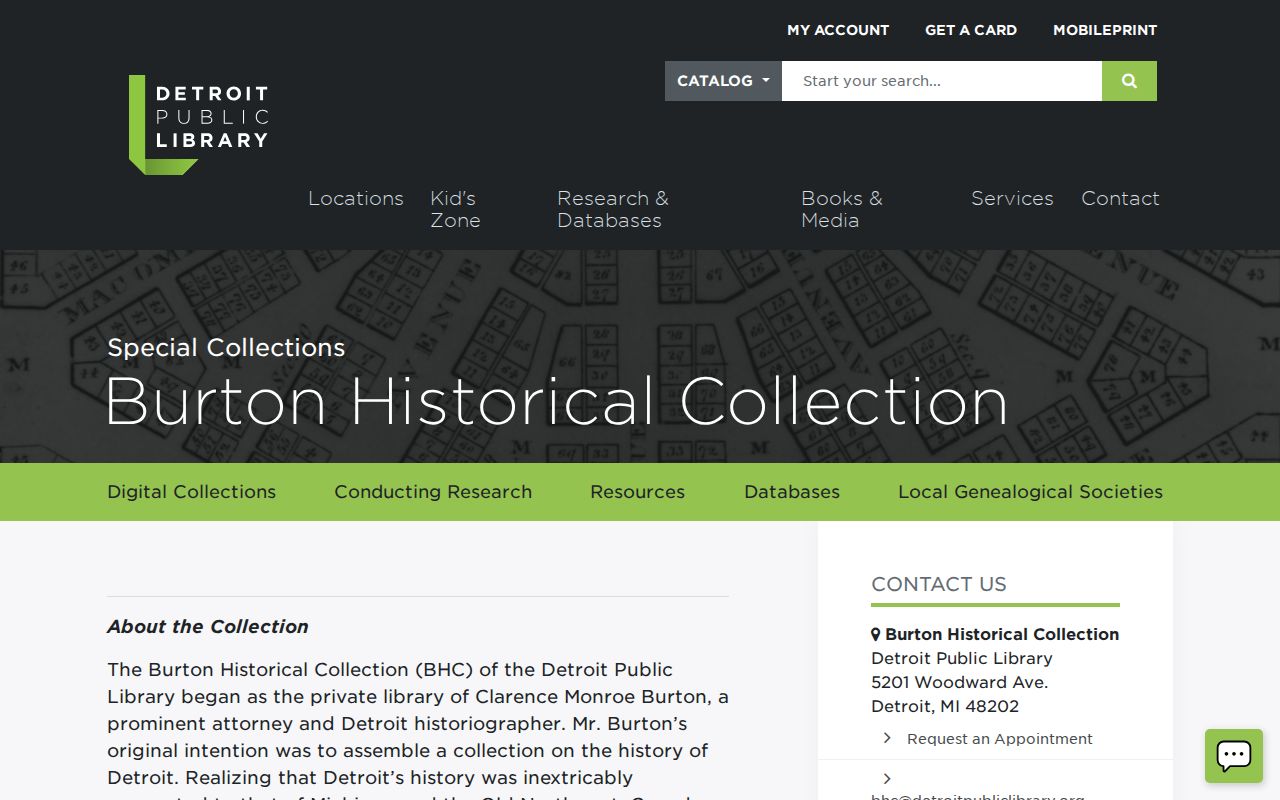
Bring year ranges, street-number variants, the directory format, and a short citation list, because many archival sources are not indexed by a person’s name.
Wayne County City Directory Entry Fields
A historical entry normally gives a surname, given name or initials, an occupation, and a street address. It may add a spouse or widow notation, a business, or a telephone listing. These details are printed descriptions from that year. They are not a complete roster of a household. A wife, child, boarder, or someone who moved between editions may not appear. Preserve abbreviations and initials rather than silently expanding them.
| Name as printed | Keep initials, suffixes, and widow or household wording exactly as shown. |
|---|---|
| Street address | Copy the house number and street, then compare it with contemporary maps before modernizing it. |
| Occupation line | A period descriptor that can distinguish same-name entries, not a current identity claim. |
| Spouse or widow notation | A family-history lead that still needs confirmation in another dated source. |
| Owner notation | Some later formats include an ownership indicator; verify title through the deed record. |
- Criss-cross directory
- A reverse directory arranged by street and house number instead of surname.
- Householder index
- A listing that generally centers on the named head of household, not every person in the home.
- Abbreviation key
- The volume’s explanation of its shortened labels; copy it with the entry before interpreting a mark.
Note: A directory listing, a deed grantee, and a taxpayer address describe different relationships and should remain separately labeled.
Wayne County City Directory Formats
The Library of Michigan distinguishes several useful forms. A surname directory can combine names, occupations, household information, and ownership clues. A street section is alphabetical by street and ordered by house number. Telephone books often center on the head of household. Classified books are a different format again. Knowing the format avoids reading a business contact as a household listing.
Bresser or criss-cross directories are especially helpful for address history. The state guide says they can show the street, house number, head of household, telephone, owner indicator, year first listed, “new to address” or “new to directory” notation, building directory, and relocation clues. Their coverage begins later, around the late 1960s in the guide, and varies by place. Use the street section to find adjacent yearly entries, then compare the surname section and an independent source.
For modern street-keyed public records after the historical trail is clear, use the Wayne County streets reference rather than forcing a historical volume to answer a current question.
Trace Wayne County City Directories
Family-history work is strongest when each directory line is dated and placed beside another source. Start with the first likely appearance, then follow the printed name through nearby available years. Write down the address as printed, any occupation or family notation, the volume format, and whether a street entry agrees. The 1950 census is the latest publicly released federal census under the 72-year rule; later federal censuses remain closed.
- Set the city and time range, then locate the earliest plausible surname or street entry.
- Copy the entry, page, year, spelling, and any abbreviation key that affects its meaning.
- Compare the prior and following available volumes for moves, “new to” language, or a changed name form.
- Pair a directory year with the closest census, deed, newspaper, probate, cemetery, or vital-index lead.
- Keep unresolved same-name possibilities in the timeline instead of combining them.
Deeds establish an ownership history, directories establish that a person was listed at an address, and a census supplies an enumerated household snapshot. Confidence rises when two independent records agree on the year, address, and identity. A disappearance can mean a move, death, listing change, or an unavailable volume, not one certain event.
Wayne County Digitized Directory Leads
The Detroit Public Library has a digitized 1927 Detroit classified directory record. It is a collection lead, not a complete personal register. Classified directories organize organizations and business categories differently from surname and street sections, so the record type should be clear in research notes. A search that needs household continuity should return to the city-directory and criss-cross formats where available.
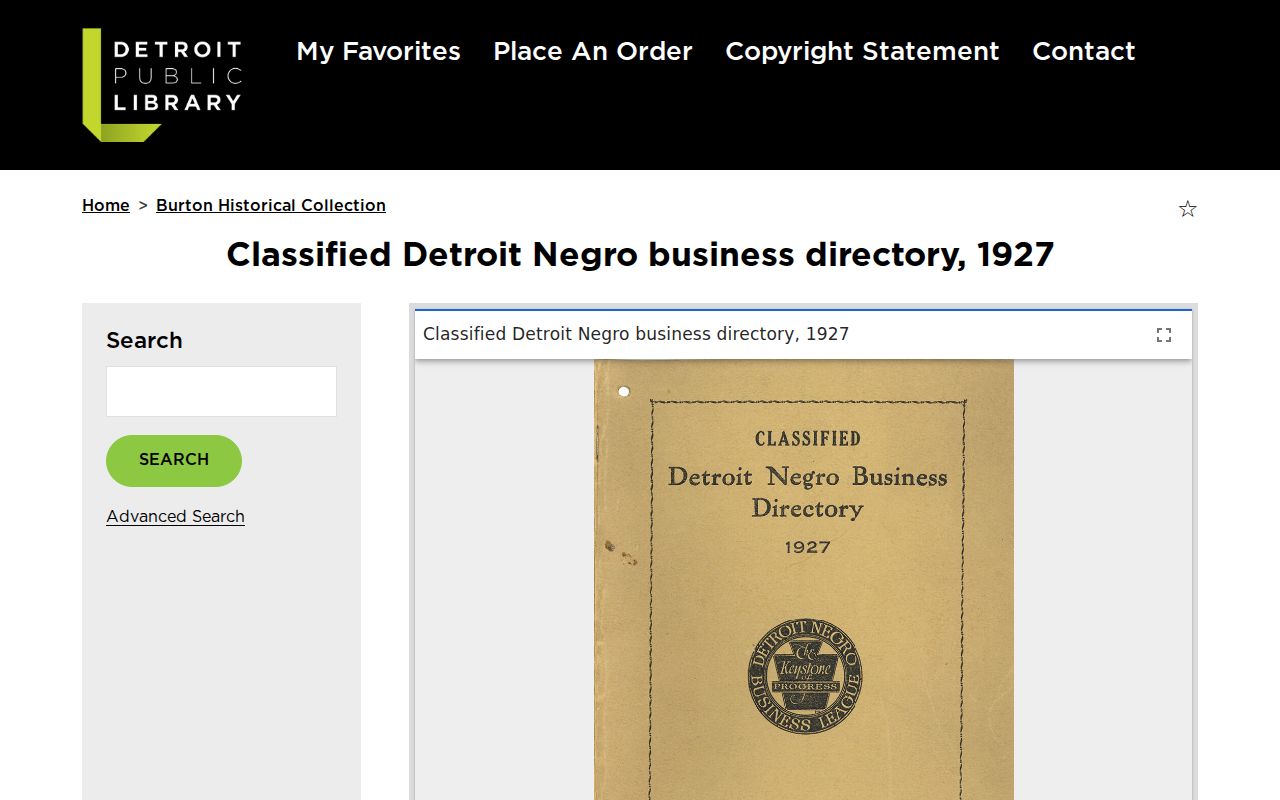
The digitized item can narrow a place, format, or time period, while a full citation still needs its title, year, page, and the result actually read.
The Detroit Historical Society collection guide adds biographical, African American, architecture, business and retail, industrial, city-view, and oral-history categories. These are finding aids with item-level coverage, not a name-search form. They can help explain a neighborhood or a family document after an address and year have been established.

Collection categories broaden the historical search beyond directories, but each item needs its own date, geography, and source citation.
Wayne County Directory Gaps
Wayne County was established in 1796, while Detroit was founded in 1701. Changing municipal lines, languages, and record custodians help explain why a directory trail can shift in form or location. For an old address, compare the directory spelling and number against a plat, deed legal description, and later map. No single official countywide street-renumbering or annexation chronology was located.
Do not replace a missing suburban year with an unsupported answer. Record the custodian, catalog query, year range, and limitation. The Library of Michigan’s Wayne County guide, Burton’s local materials, municipal libraries, newspapers, church records, cemetery indexes, and the 1893 Wayne County atlas can supply period-specific alternatives. That is more reliable than assuming a Detroit volume reaches every community in the county.