
Wayne County Resident Lookup Records
No Wayne County source is a single current-person file. A resident may be a directory listing, a named census household member, a registered voter, a parcel owner or taxpayer, a court party, a custody result, or a person named in a vital record. Those labels are not interchangeable. The safest result notes the source agency, record type, date or coverage, search method, relationship label, access restriction, and the official URL.
| Record | What it can confirm | Where | Access |
|---|---|---|---|
| Third Circuit case index | A case number, style, filed location, type, and status | Third Judicial Circuit Odyssey public access | Public index and register lead, unofficial |
| Michigan Vote status tool | Current registration, clerk, and precinct routing for an individual | Michigan Vote/MVIC | Current administrative lookup, not a bulk file |
| QVF geographic request | Defined public voter fields and requested history, with redactions | Michigan Department of State FOIA process | One selected geography, controlled delivery |
| Vital certificate or verification | A birth, death, marriage, or divorce event under state rules | Michigan MDHHS Vital Records | Eligibility and record type control access |
| Parcel and recorded instruments | Parcel context, taxpayer or title trail | Local assessor, GIS, and Register of Deeds | Not proof of present occupancy |
For a current-address question, the research sequence is address first: Wayne Treasurer property search, county or municipal GIS, local assessor, then the deed index, with a lawful civic confirmation only when needed. Common surnames, aliases, multi-unit buildings, and out-of-county mailing addresses make a name-first match risky.
Note: Keep “owner,” “taxpayer,” “mailing address,” “registered voter,” “directory listing,” and “party” as separate source labels.
Search Wayne County Court Records
The Third Judicial Circuit Court of Michigan Odyssey public access is the county court-search starting point. Criminal modes include Case, Defendant, Citation, Attorney, and Date Filed. Non-criminal modes include Case, Party, Attorney, and Date Filed. The public controls documented for these searches include name or business, agency number or SID where relevant, date bounds, case status, sort choices, and CAPTCHA. Non-criminal party search also supports exact-name and soundex-style search behavior.
| Search category | Choose a criminal or non-criminal path before entering a name or case detail. |
|---|---|
| Name controls | Use the recorded spelling; where available, compare exact-name and soundex-type modes. |
| Status and dates | All, open, or closed status and filed-date bounds can narrow a broad result set. |
| Result fields | Record count, case number, style, filed date and location, type, and status. |
Search mode belongs in the notes. A same-name result may involve another person, an alias may be missed, and a case can have a party in more than one role. The official Odyssey manual illustrates the result structure, including case number, style, filed date and location, division, type, and final status.
Third Circuit’s case-search entry point is the source for the public court-search route.
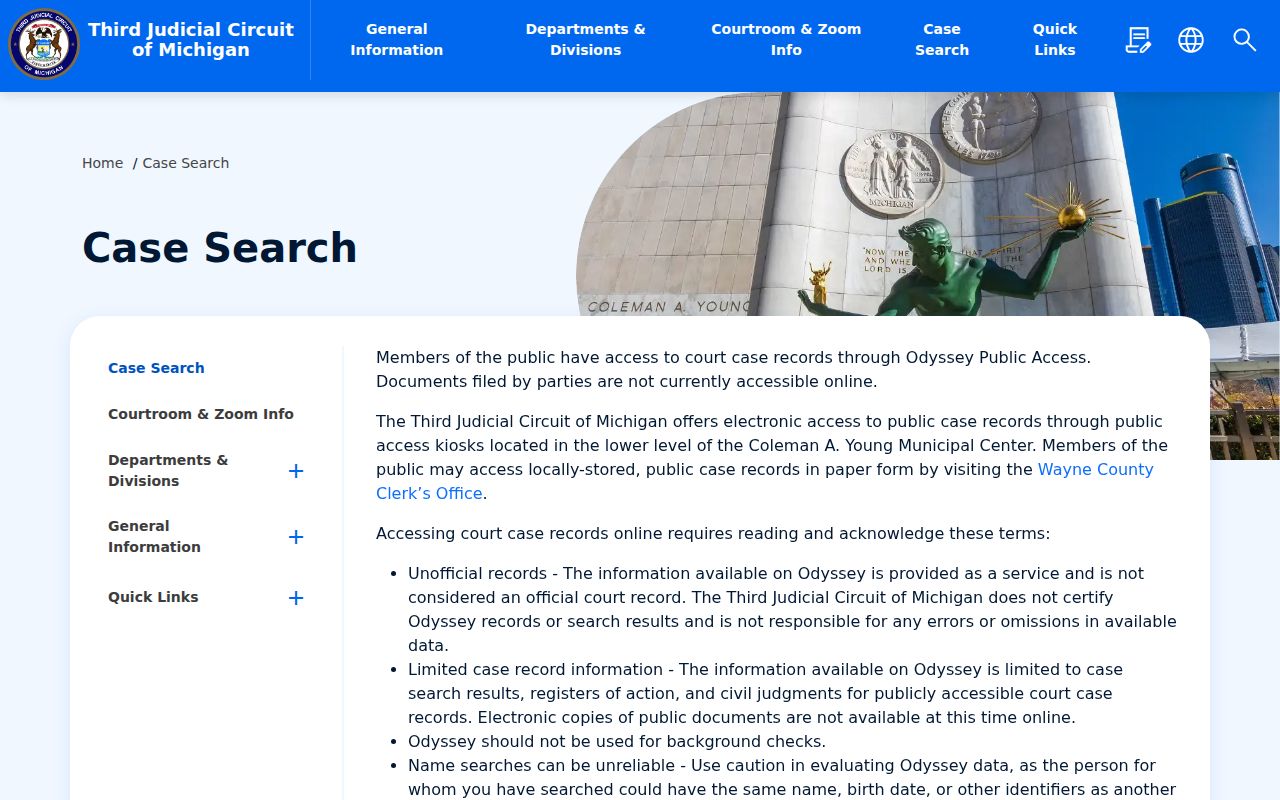
The screenshot shows the public search categories, not a certified record or a claim about any person returned by a search.
Read a Wayne County Odyssey Result
Odyssey’s public output is an index or register lead. It may make a register of action and civil judgments available, but party-filed documents are not online, and the court describes public access as unofficial. Errors and omissions are possible. A public result should therefore be followed to the records custodian when a copy or confirmation matters.
Wayne County Clerk records cover civil and divorce materials from 1942 forward, with criminal routing that changes by location and year. Files from 2010 forward can be viewed in the Clerk records room at CAYMC. Older files can be ordered from Archives. Detroit criminal records and records after 1983 route to the Frank Murphy Hall of Justice records room. A final divorce judgment comes from the court that finalized it; state vital records provide a separate certificate or verification route.
- Docket
- A case’s running court record of filings and events, often called a register of action.
- Index versus image
- An index identifies a record and its fields; an image is the underlying document, which may have separate access rules.
- Certified copy
- A copy issued by the custodian with its official certification for a purpose that requires one.
Note: A court party is not a conclusion about identity or conduct. Confirm the role, case status, date, and custodian record.
Verify a Wayne County Resident
A careful resident lookup anchors a name to a dated, source-labeled fact before it searches elsewhere. An address is useful for geographic context, but a parcel record may show a taxpayer or owner instead of a person who lives there. A voter-status result is date-specific. Court and vital records are legal-event evidence. Keep more than one plausible same-name person separate until independent sources agree.
- Choose the exact question and its date, such as a court event, voter status, address history, or family relationship.
- Record the name spelling, suffix, address or parcel key where applicable, and the official source used.
- Run the matching portal with the narrowest available date and status controls, then save the result fields and search mode.
- Compare only a second, independent record that supports the same identity through date, address, relationship, or case detail.
- Request a custodian copy or certified record when the public index alone is not enough.
Historical work follows a different path. Set a year range first, then compare city directories, census records, deeds, newspapers, probate, cemetery material, and vital indexes. The Wayne County city-directory collections are useful for dated address listings, but a directory line is not a full household list.
Michigan Vote and Wayne County Scope
Michigan Vote/MVIC is an individual registration-status and clerk or precinct lookup. It is not a public bulk resident list. Registration actions use Michigan driver-license, state-ID, or last-four Social Security information through the state workflow. Final-14-day and Election Day changes route to the local clerk or satellite office with proof of residency; city and township clerks remain the right local office for those questions.
A defined geographic QVF request uses the official QVF FOIA form. Its scope can be the state, county, jurisdiction, district, school, village, or ward and precinct. It asks for requester details, one geography, desired vote-history selections, and a delivery choice. Electronic CSV is supplied by encrypted flash drive or FTP when set up, not ordinary email.
Michigan Vote is the source for the individual status-and-precinct route.
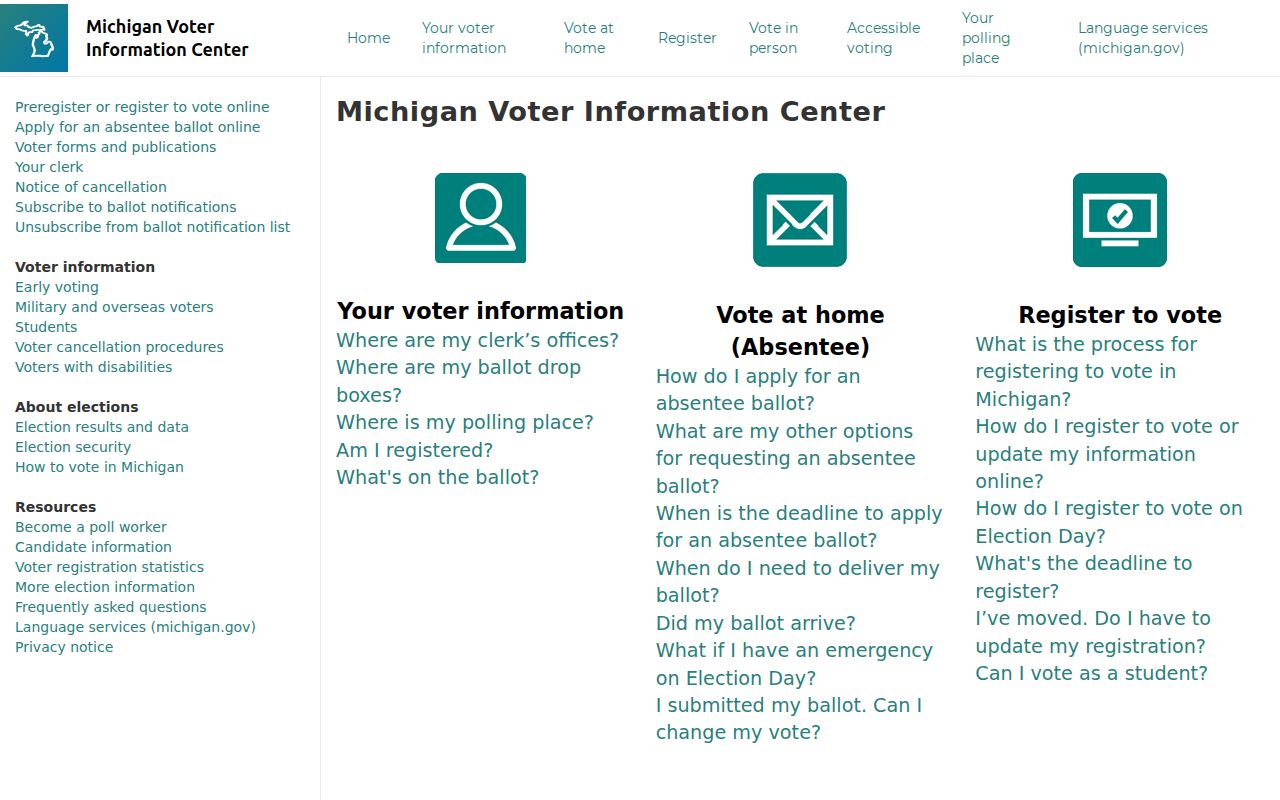
The state tool can direct a person to registration and precinct information, while a QVF request has a defined scope and statutory redactions.
Vital Events in a Resident Lookup
Michigan MDHHS Vital Records is the statewide ordering point for Wayne County births, deaths, marriages, and divorces. These are event records, not current-address records. Birth copies are restricted before 100 years to listed eligible categories, while a birth verification gives only name, date of birth, place, and filing date when available. Death and marriage verifications similarly provide limited event details. Divorce certificates come from the state process, but the court that finalized the case holds the judgment.
The Michigan Vital Records order page documents mail, VitalChek, telephone, drop box, and appointment channels. Online and phone access is available around the clock; supporting material and eligibility depend on the record. The listed standard search is $34 plus $14 online processing, is non-refundable, and does not guarantee a record. Check the current order page before relying on a fee or timeline.
Michigan’s official order channel is the source for the record-type and eligibility limits described here.
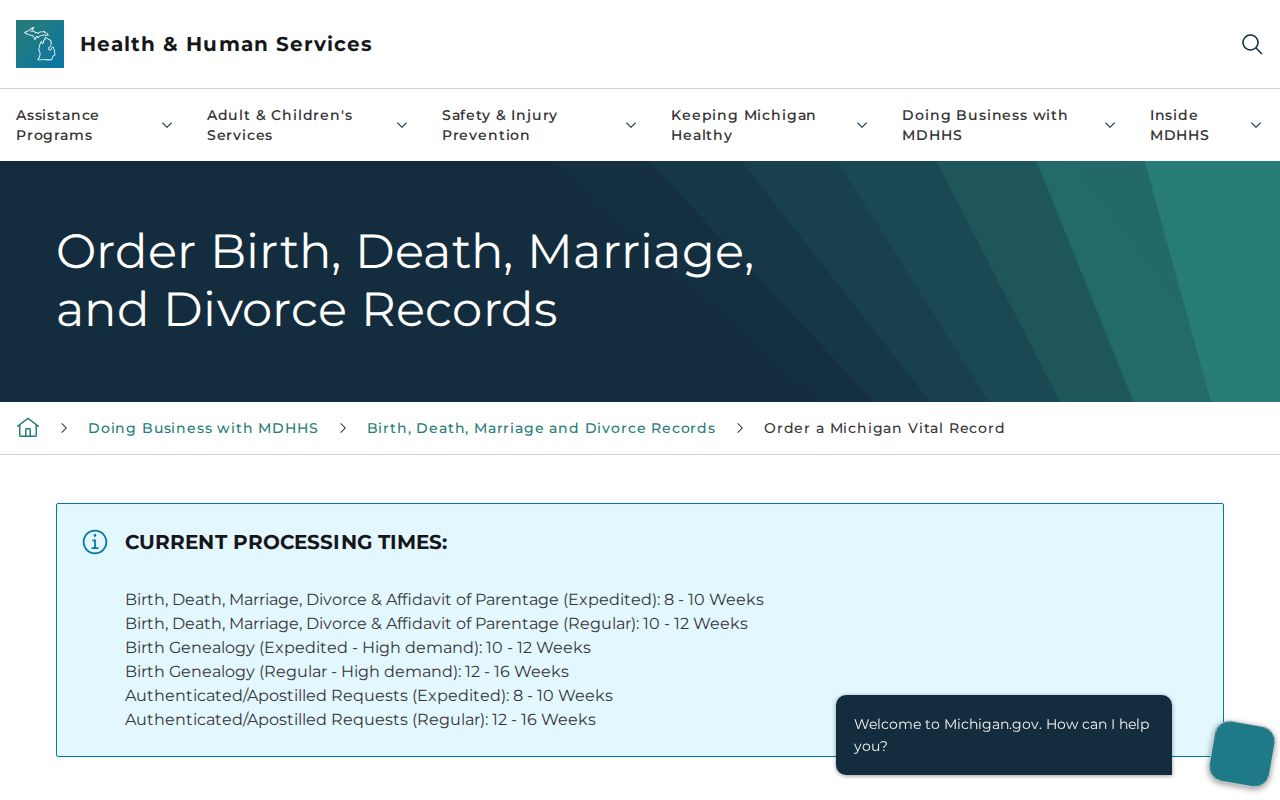
A verification is narrower than a certificate, and neither type should be used to infer a living person’s present address.
Wayne County Records Request Path
When an online index does not show the needed existing record, identify the custodian, precise record name, date range, geography, and format. Wayne County accepts general requests through its FOIA request route, and its procedure does not require one particular form. Requests may be made in person, by mail, fax, or email. The county’s records contact is foiarequests@waynecountymi.gov; the request should describe the record clearly enough for a search.
Michigan Freedom of Information Act, 1976 PA 442, MCL 15.231 et seq., generally provides five business days for a response, with one extension of up to ten business days under MCL 15.235. A response can grant, deny, partly grant, seek clarification, or request fee payment. It cannot require a custodian to create a new person list from unrelated systems. For a court file, vital record, or protected voter information, the governing custodian and access rule still control.
Protect Wayne County Resident Information
Michigan voter records have important limits. MCL 168.509gg protects driver and state-ID numbers, month and day of birth, phone, email, signatures, declined-registration details, and protected information. The Michigan Address Confidentiality Program protects designated addresses and related voter information. A missing result may reflect a protected person, a coverage limit, a changed name, or a custodian rule. It is never proof that someone does not live in Wayne County.
The Address Confidentiality Program is governed by 2020 PA 301, MCL 780.851 et seq. Its official state information explains that participant physical addresses are confidential. Do not try to reconstruct a protected location from voter, parcel, court, or address records. For a privacy concern, use the program’s official redaction and contact route instead.