
Wayne County Previous Residents by Era
Wayne County house history is strongest when the record is chosen for its period. The Wayne County Land Records index supplies recorded-instrument leads and copies from January 1, 1960 forward. Earlier county material still exists, but it needs an archive or office route. Detroit directory holdings at the Burton Historical Collection have useful but uneven runs, while the federal census supplies a dated household snapshot through 1950. Maps add building and land context, not names. A later property owner can be the wrong person for an earlier household, so date each item before placing it in a timeline.
| Source | Years It Covers | Where Held | What It Shows |
|---|---|---|---|
| Register of Deeds index | Online index and copies from 1960 | Wayne County Land Records, office, or mail search | Recorded parties, instrument dates, legal description, and document clues |
| Detroit city directories | 1837; 1845–46; 1850–1941; selected East/West volumes through 1974 | Detroit Public Library Burton Historical Collection | Listed names and addresses for the years actually held |
| Federal census | Public schedules through 1950 | NARA and library research access | A household snapshot on the census date |
| Sanborn and historic maps | Michigan microform includes 1884–1961, with later unpublished coverage for many towns | Library of Michigan and Detroit Public Library access | Building footprint, use, neighborhood, and map-era address context |
| Probate, newspapers, cemetery, and church sources | Varies by collection and event | Burton, Library of Michigan, courts, and archives | Family or life-event confirmation after the address trail is formed |
For a recent transfer, start with the recorded instrument and carry its legal description backward. For an older Detroit household, start with the best matching directory year, then test the name and address against the census. For a suburban address, confirm that a Detroit volume actually covers that municipality before relying on it. The Library of Michigan catalog and local library are the appropriate fallback when no complete official suburban directory run was located.
Wayne County Deeds Since 1960
The Register of Deeds index is the key bridge from a present parcel to earlier recorded ownership. It covers deeds, mortgages, assignments, discharges, liens, and other recorded instruments. An online result is a lead, not a title opinion. The record can identify the grantor, grantee, instrument or recording date, legal description, and liber, page, or document number. Preserve the search date and exact spelling because a later name change, an estate, or a business entity can interrupt a simple surname trail.
For a visual starting point, the Wayne County Land Records index shows the recorded-land route used to trace Wayne County previous residents through the ownership record.
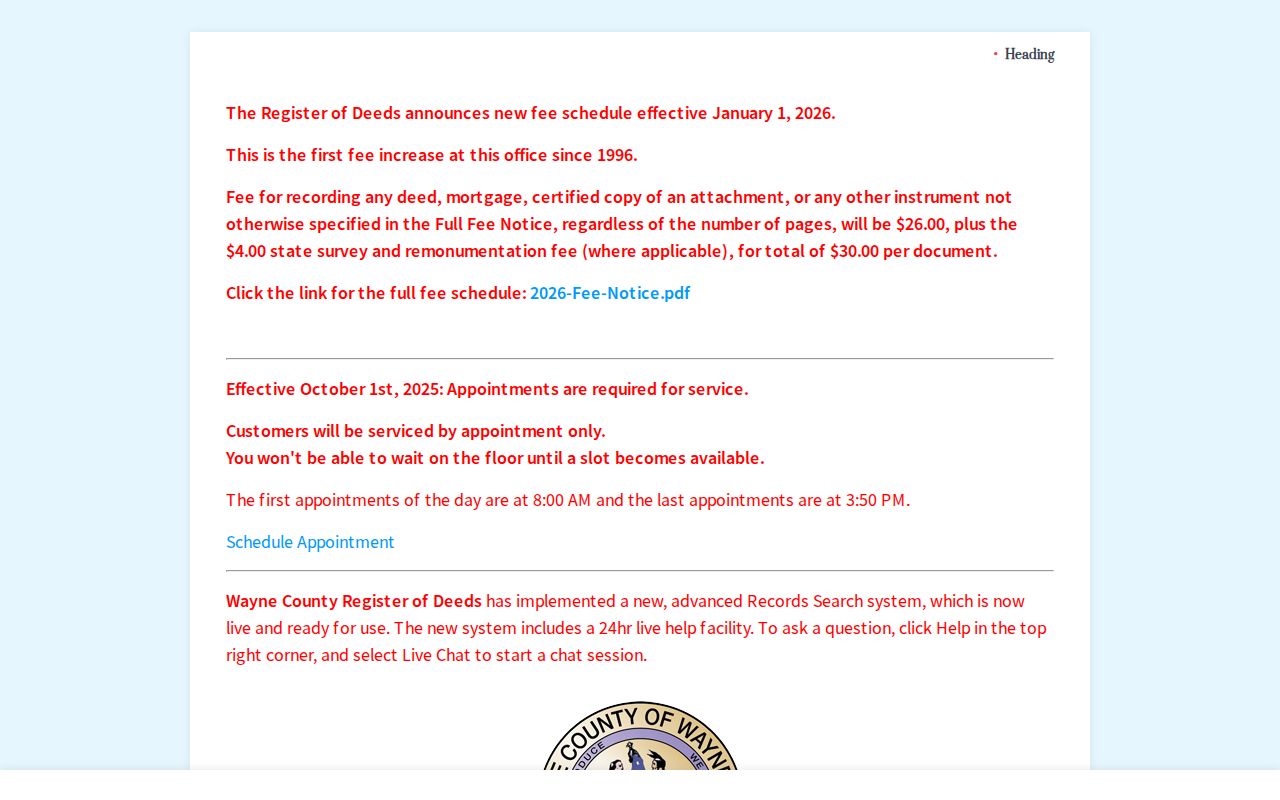
Use the result to capture an instrument number or legal description before moving to another record type. The index does not establish who occupied the property on the day a deed was recorded.
Wayne County offers the online index around the clock. A walk-in search may be requested by name, address, or location, and a mail search is also available. The fee notice says there is no phone or fax search. Certified copies and older materials require the custodian route described by the Register of Deeds, so a dated request should name the address, parcel, legal description, document number, or party name already found.
Trace Wayne County Previous Residents Through Deeds
A deed chain follows ownership, not every person who lived at the address. Start with the municipality identified by the parcel or tax record. Detroit uses its own Assessor and Parcel Viewer, and other Wayne County cities and townships maintain local assessor records. Carry the parcel ID forward, then use the current recorded transfer to locate the seller. That seller’s earlier purchase is the next link. The legal description is often more durable than a street address when an old record uses a different form of the address.
- Normalize the house number, directional, street name, suffix, unit, municipality, and ZIP. Obtain the parcel ID and legal description from the local assessor or relevant parcel viewer.
- Search the current owner or recorded party in the Wayne County Land Records index. Record the instrument date, recording date, document number, and legal description exactly as shown.
- Open the purchase deed and identify the seller. Search that seller as a grantee to locate the earlier acquisition, checking the legal description before treating it as the same property.
- Repeat the transfer sequence backward. Mark estate, trust, corporate, foreclosure, or name-variant links as unresolved until the document supplies a connection.
- When the path reaches the 1960 online boundary, use the Register of Deeds, Archives of Michigan, or a documented archival route for older material. Keep a note of the search key and negative result.
- Grantor and grantee
- The grantor transfers an interest in the property. The grantee receives that interest. Those labels identify parties to a document, not occupants.
- Chain of title
- A dated sequence of recorded transfers for one property. It must be tested against the legal description rather than assumed from a matching street address.
- Legal description
- The lot, subdivision, metes-and-bounds, or other formal property description in the deed. It is the durable key when historic numbering or a common address changes.
Note: A taxpayer, mailing address, deed grantee, and person listed at the address can all describe different relationships to the same property.
Wayne County Addresses Change by Record
A house can carry a postal city, a legal municipality, a tax parcel identity, and an older directory spelling at the same time. Wayne County is not a single municipal record system. Detroit records are not a substitute for those of Dearborn, Livonia, Westland, Downriver cities, or townships. Let the tax or parcel municipality choose the next custodian. A postal label should not choose it.
The research did not locate one official countywide street-renumbering or annexation chronology. For an address that appears to disappear, compare the original directory street page with a plat, the deed legal description, later maps, and nearby house numbers. Record both forms of the address rather than silently converting the older one. This is a useful Wayne County comparison: the same physical place can return different labels in USPS, tax, title, directory, and civic sources.
House-history practice. Build a year-by-year evidence table with the source, printed name, printed address, relationship label, parcel or deed key, and any unresolved identity issue.
Wayne County Previous Residents in Directories
Ownership is only one layer of a past household. Detroit city directories can identify a person listed at an address, while Bresser and criss-cross formats can organize entries by street and house number. Some entries show a head of household, a telephone, owner or occupant notation, a year first listed, a move indicator, or relocation clues. They do not enumerate every household member. A directory absence is not proof that a person was absent from the address.
The Burton Historical Collection at Detroit Public Library holds Detroit city and telephone directories, newspapers, maps, family histories, church records, obituaries, cemetery material, and early land sources. For a library approach to the historical volumes, use the Wayne County city directory collections route. Its exact Detroit runs include gaps, and suburban Wayne County coverage varies by publisher. The Library of Michigan ANSWER catalog and a local library are better sources for a municipality outside the Detroit run.
- Choose a directory year close to the property transfer or an already known household event.
- Search the street and house number, then inspect nearby numbers and the surname pages for spelling variants.
- Copy the printed name, address, notation, year, and call number. Do not expand initials or infer relationships from an entry.
- Pair the directory year with the closest public census schedule. The 1950 Census is the latest public federal census under the 72-year release rule.
- Use newspaper, probate, cemetery, church, or vital materials only to confirm a specific dated connection. Preserve conflicting results instead of forcing a match.
Wayne County Previous Residents on Maps
Sanborn maps are building evidence. They can show a footprint, use, construction material, and hazards at a given map date, but they are not a resident list. Detroit Public Library offers Digital Sanborn Maps inside library locations. The Library of Michigan identifies microform coverage from 1884 to 1961 and later unpublished coverage for many Michigan towns. Use the map beside a directory or deed to establish whether the structure and address form make sense for that year.
The Library of Michigan Sanborn microform listing documents a map access path useful for Wayne County previous residents research.
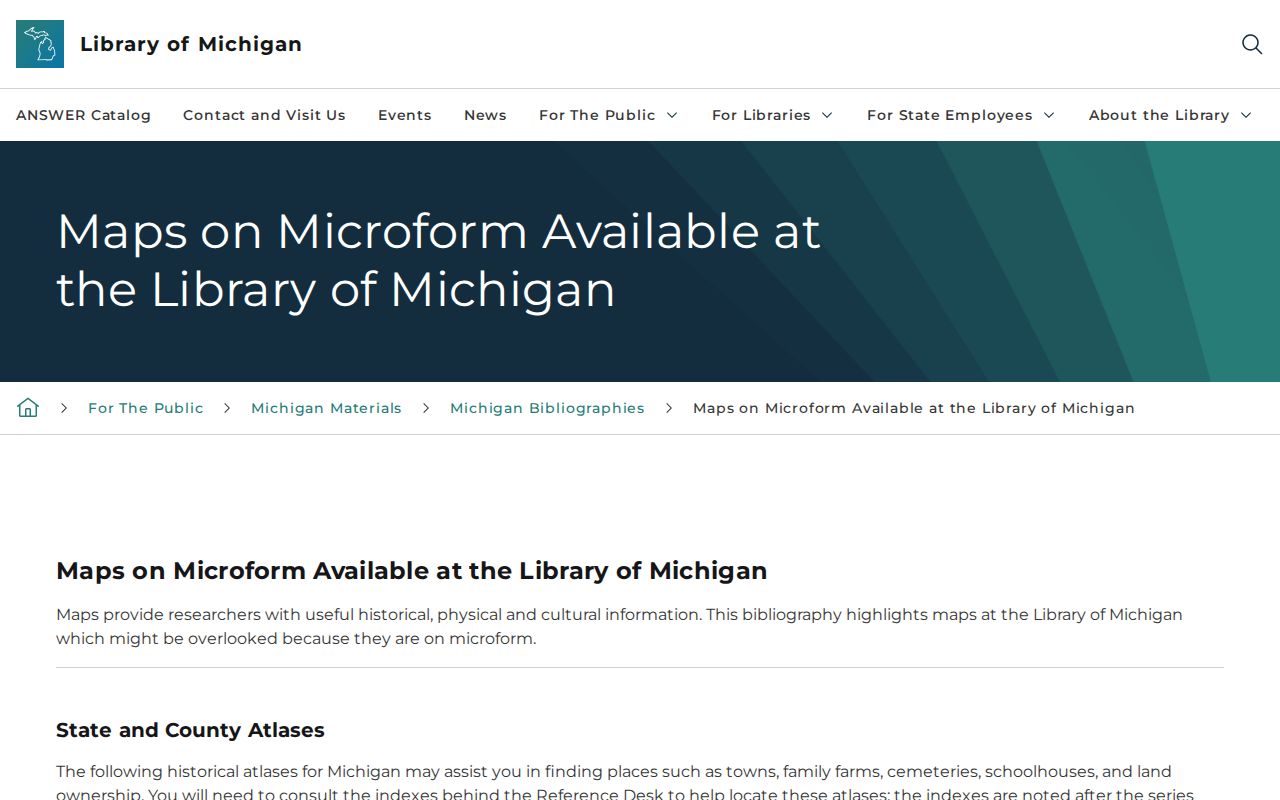
Pair a map date with the exact source date already in the timeline. A building shown on a Sanborn sheet does not by itself prove who lived there.
For an earlier land and subdivision perspective, the 1893 Library of Congress Wayne County atlas includes Detroit and Wayne County plats, indexes, and landowner material outside the 1891 city limits. It can help compare an old legal description with a subdivision name, although a landowner plate still needs deed and directory confirmation.
Wayne County Past Residents at Trail Endpoints
When a name stops appearing at an address, switch from property records to life-event and estate sources. Burton lists newspaper notices from 1809 to 1868, early land transfers, probate estate packets, church records, and cemetery materials. The Library of Michigan Wayne County guide adds county directories, maps, newspapers, and other local-history leads. These sources can test whether a household moved, died, inherited property, or appears under a different spelling.
Probate establishes a legal estate event, not a complete household. A death or burial source establishes an event, not a person’s last residence. Keep those labels separate. The same care applies to obituaries, which may use a former address, a family contact, or a publication date later than the move. A missing online image or an unavailable suburb directory year is a coverage result, not proof that no record exists.
Note: Bring year ranges, historical spellings, street-number variants, and a target citation list to Burton or Archives research.
Wayne County Previous Residents and Privacy
House history, family history, estate questions, and neighborhood history can be legitimate reasons to follow a dated address trail. The work must stop short of exposing or reconstructing protected information about living people. Michigan’s Address Confidentiality Program protects designated addresses and related information for eligible participants. A missing parcel, voter, or address result can reflect a protection or a coverage limit, not a conclusion about where anyone lives.
Lawful use. Use Wayne County past-resident records for personal, historical, or family research. Do not use a house timeline to watch, track, harass, intimidate, or harm any living person.
For a suspected fraudulent transfer, confirm the instrument through the Wayne County Register of Deeds Fraud Unit rather than relying on a private notice. Preserve the document number, recording date, notice, and parcel ID. The Fraud Unit hotline listed by the county is 313-224-5869.